

 +91 9845123806
 ssinstruments2001@yahoo.co.in
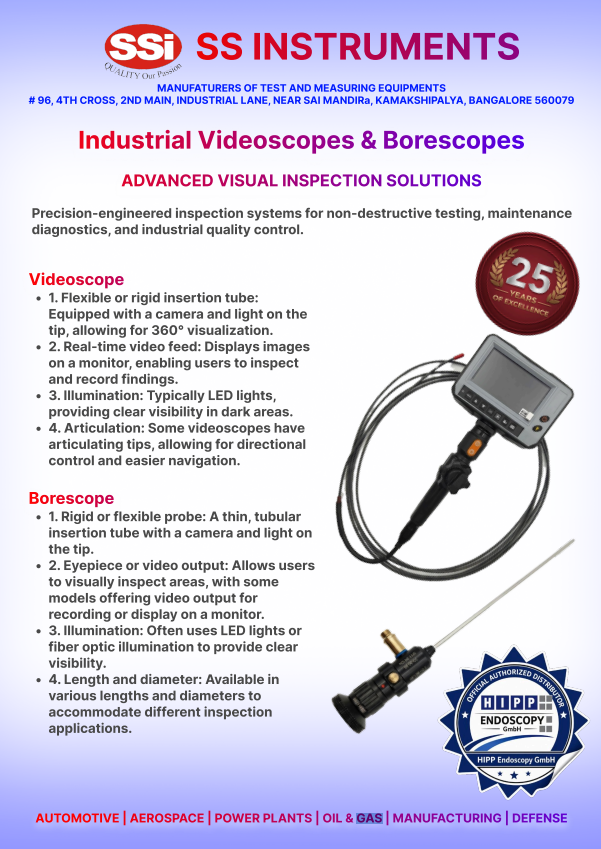
Precision-engineered Inspection systems for non-destructive testing, maintenance diagnostics, and industrial quality control.
Key Differences
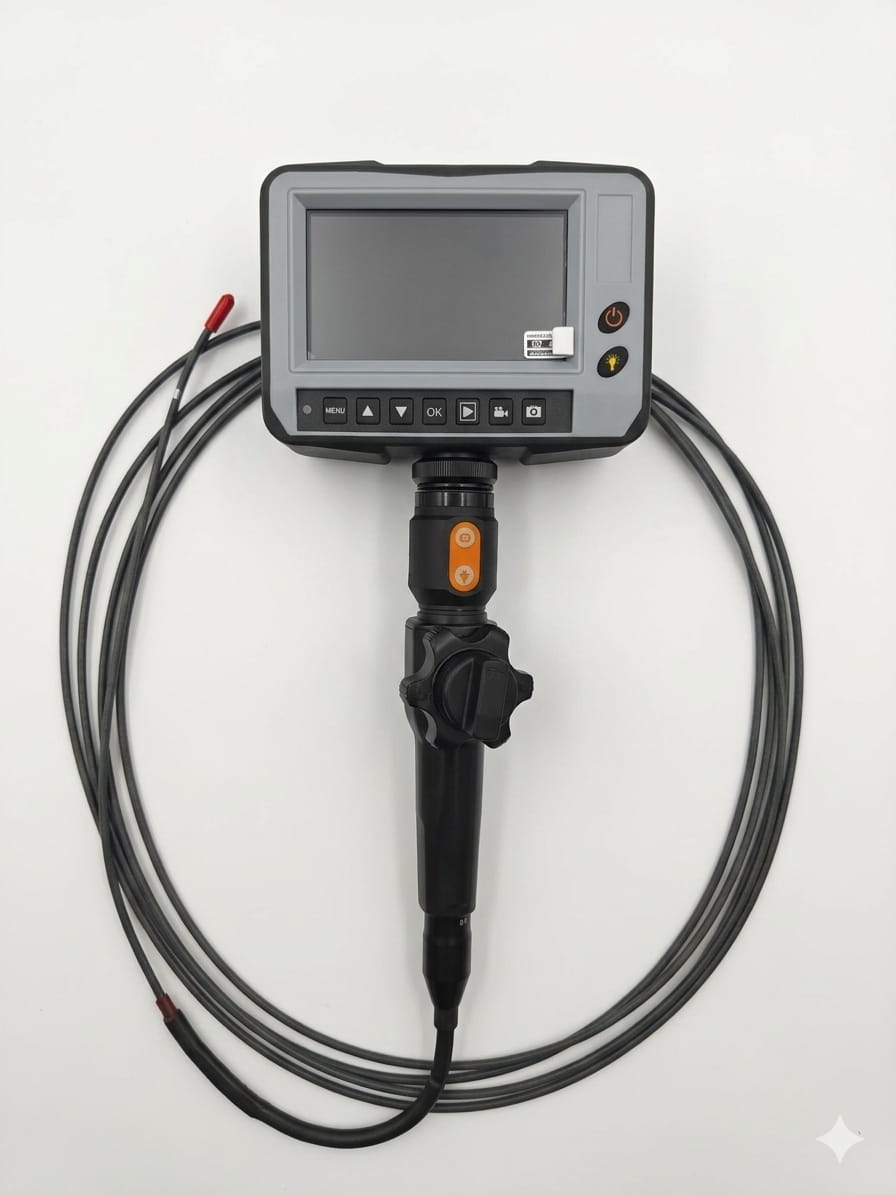
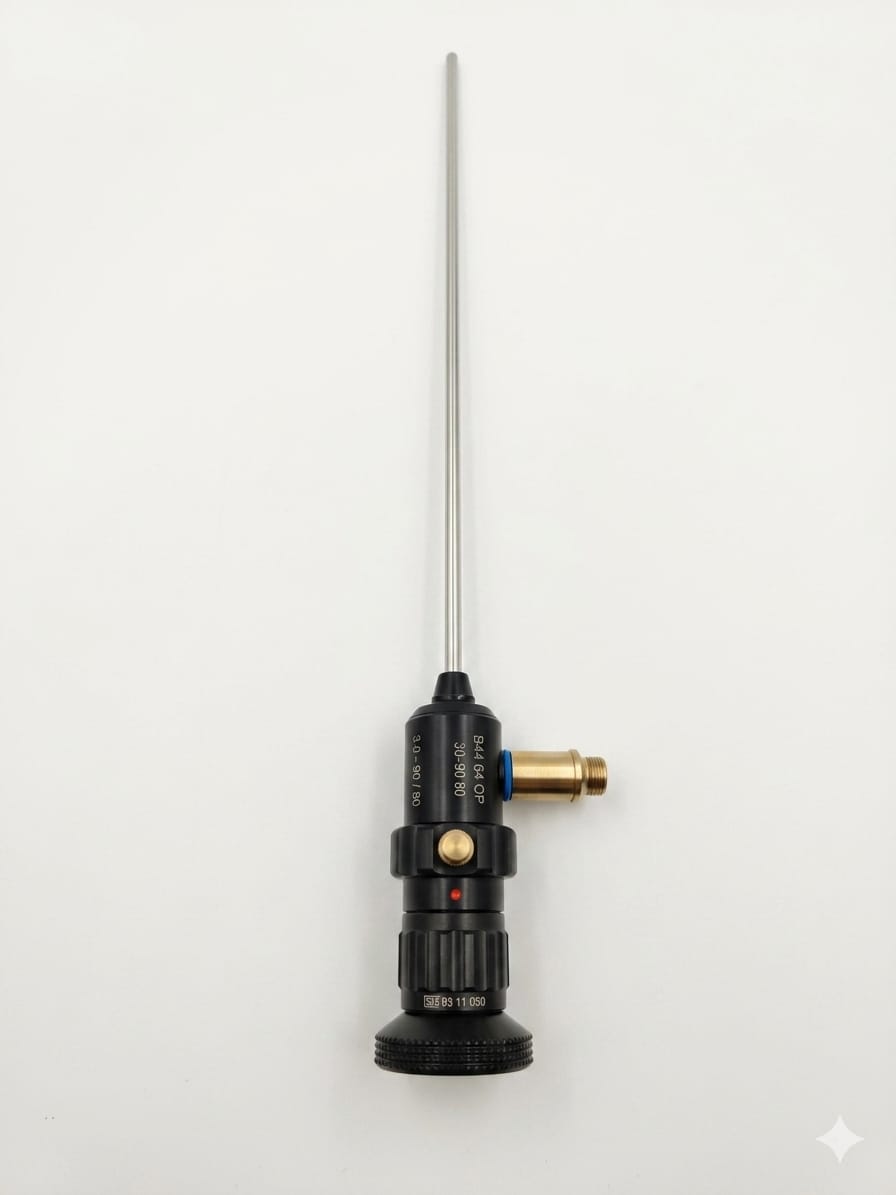
- Flexibility: Videoscopes often have flexible insertion tubes, while borescopes may have rigid or flexible probes.
- Articulation: Videoscopes typically offer articulating tips, whereas borescopes usually do not.
- Video output: Videoscopes generally provide real-time video output, while borescopes may only offer an eyepiece for direct visual inspection.
Download Catalog of
Industrial Videoscopes & Borescopes
Applications
- Aerospace: Inspecting aircraft engines, fuel tanks, and other hard-to-reach areas.
- Automotive: Examining engine components, fuel systems, and other internal mechanisms
- Industrial: Inspecting pipes, tanks, and other equipment in various industries, such as oil and gas, chemical processing, and power generation.
- Medical: Using specialized videoscopes and borescopes for minimally invasive medical procedures.
Benefits
- Reduced downtime: Faster inspections minimize equipment downtime.
- Increased safety: Remote visual inspection reduces the risk of injury or exposure to hazardous environments
- Improved accuracy: High-quality images and video enable more accurate assessments and diagnoses.
- Cost savings: Non-destructive testing reduces the need for costly repairs or replacements.
Our Industrial Videoscopes & Borescopes Applications

Flexibility

Articulation